Book Appointment Now

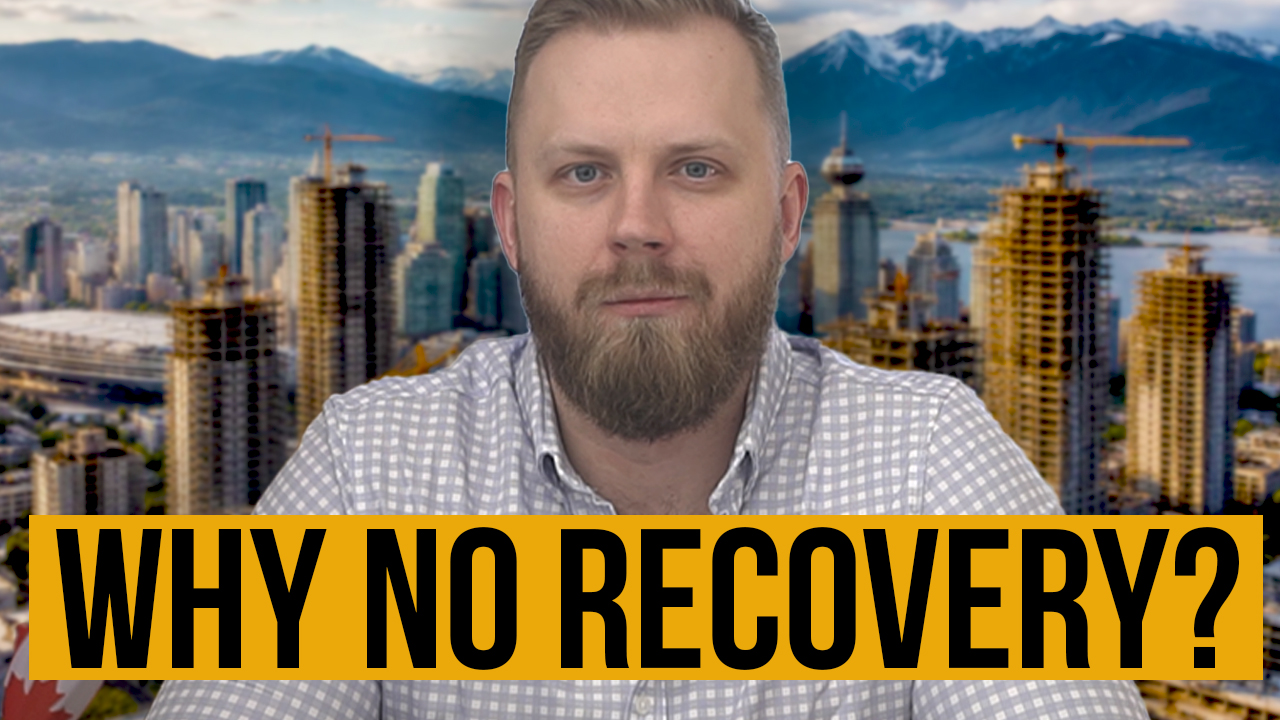
The Real Reason Vancouver’s Housing Market Isn’t Recovering in 2026
Vancouver just experienced one of the weakest real estate years on record. Home sales have slowed dramatically, inventory levels are elevated, rental rates are falling, and buyers remain cautious.
So the natural question is:
Why isn’t the Vancouver real estate market recovering?
Normally, after a slowdown, we would expect pent-up demand to return. Buyers who were waiting step back in. Sellers adjust their pricing. Activity gradually improves.
But that’s not happening — at least not yet.
In this article (and the video below), we’ll break down the structural reasons why Vancouver’s housing market isn’t rebounding and what actually needs to happen before we see a meaningful recovery.
📺 Watch the Full Breakdown Here
1. Elevated Inventory Is Preventing a Rebound
The first and largest factor holding the market back is supply.
Vancouver’s active listings are currently about 40% above the 10-year seasonal average. That’s a significant increase in available homes.
In addition to resale inventory, there is also what many refer to as “shadow inventory” — completed but unsold condos from developers. Estimates suggest between 2,500 and 3,500 vacant units are sitting on the sidelines.
Real estate markets operate on supply and demand. When supply materially outweighs demand, prices face pressure and activity slows.
The market cannot meaningfully recover until this inventory begins clearing.
2. Demand Has Weakened Across Multiple Fronts
While elevated supply is one side of the equation, weaker demand is equally important.
For years, Vancouver real estate was driven by three powerful demand engines:
- Immigration and population growth
- Investor activity
- Fear of missing out (FOMO)
Today, all three are significantly weaker.
Slower Population Growth
For the first time in modern Canadian history, population growth has stalled and is not expected to grow in 2026. Adjustments to immigration policy, fewer international students, and fewer temporary workers have all reduced housing demand pressure.
Less population growth means less demand for both rentals and home purchases.
3. Falling Rental Rates Reduce Urgency
Vancouver’s rental rates have declined approximately 16% from their peak and have been trending lower for nearly two years.
This shift creates two major effects:
- Tenants feel less urgency to buy if renting is cheaper and becoming more affordable.
- Investors see weaker rental yields and reduced incentives to purchase investment properties.
When rental rates are rising, investors and first-time buyers feel pressure to enter the market. When rents fall, that urgency disappears.
4. Investors Have Largely Stepped Aside
Investor demand has historically played a significant role in Vancouver’s condo market, particularly in pre-sale developments.
Today, investor activity has slowed dramatically.
As a result:
- Pre-sale inventory remains elevated.
- One-bedroom condos are sitting longer on the market.
- Absorption rates are weaker.
Without investors acting as marginal buyers, demand remains subdued.
5. Buyer Psychology Has Shifted
Market psychology may be one of the most underestimated forces in real estate.
For over a decade, buyers operated under a consistent mindset:
“Buy now before you’re priced out.”
Today, that mindset has flipped.
Now many buyers are saying:
“Maybe I’ll wait. Prices might fall further.”
When buyers expect prices to rise, they accelerate decisions.
When buyers expect prices to fall, they delay decisions.
This psychological shift alone can delay recovery for many months.
6. Prices Have Fallen — But Not Enough to Restore Affordability
Some sellers are experiencing significant losses compared to peak values. However, from a broader affordability perspective, prices remain extremely high.
If a buyer couldn’t afford a $2,000,000 home, they likely still cannot afford it at $1,850,000.
A moderate correction does not automatically restore affordability — especially in a high-cost market like Vancouver.
Until housing becomes accessible to a larger portion of buyers, demand will remain constrained.
7. Mortgage Rates Are Still Restrictive
Although interest rates have come down from their recent highs, they remain elevated compared to the ultra-low rate environment buyers grew accustomed to over the past decade.
Higher mortgage rates affect the market in two major ways:
- Monthly payments remain high.
- Buyers qualify for smaller mortgages.
Recovery cycles typically require stimulative interest rates. Current rate levels, while lower than peak tightening, are not yet expansionary.
8. Economic Uncertainty Is Dampening Confidence
Even outside of interest rates, broader economic conditions are contributing to market hesitation.
Concerns around:
- Job security
- Per-capita recession indicators
- Trade negotiations and tariffs
All weigh on consumer confidence.
When buyers feel uncertain about income stability, they delay major financial decisions — especially large real estate purchases.
9. The “Freeze Effect” Is Slowing Market Velocity
One often overlooked dynamic is what can be described as a freeze effect.
In a slow market:
- Sellers struggle to sell their homes.
- If they cannot sell, they cannot buy.
- That lost transaction removes additional transactions down the chain.
A slow market reduces velocity.
When recovery begins, it often starts with improved liquidity — once sellers can sell, they re-enter as buyers, and the cycle restarts.
At the moment, that cycle remains stalled.
What Will Recovery Actually Look Like?
It’s important to understand that recovery does not necessarily mean a return to 15-offer bidding wars and 20% annual price growth.
A healthier recovery would likely look like:
- Balanced inventory levels
- Stable, predictable price growth
- Reasonable negotiation periods
- Less urgency-driven purchasing
The next phase of Vancouver real estate may look very different from the speculative cycles of the past.
And that may ultimately be a good thing.
Comments